

- Home
-
- Products
- Products by Category
- Baths & Circulators
- Biological Safety Cabinets
- Centrifuges
- Benchtop High Speed Centrifuge
- Benchtop Large Capacity Refrigerated Centrifuge
- Benchtop Low Speed Centrifuge
- Benchtop Low Speed Refrigerated Centrifuge
- Blood Bank / Clinical Centrifuge
- Floor Standing High Speed Refrigerated Centrifuge
- Floor Standing Large Capacity Refrigerated Centrifuge
- Floor Standing Low Speed Refrigerated Centrifuge
- Micro Centrifuge
- CM-400 Series Microcentrifuge
- High Speed Micro Centrifuge CM-500 Series
- High Speed Micro Centrifuge CM-800 Series
- High Speed Refrigerated Microcentrifuge IBMC-8000 Series
- Microcentrifuge CM-200 Series
- Microcentrifuge IBMC-1000 Series
- Microcentrifuge IBMC-2000 Series
- Microcentrifuge IBMC-3000 Series
- Microcentrifuge IBMC-4000 Series
- Microcentrifuge IBMC-5000 Series
- Microcentrifuge IBMC-6000 Series
- Refrigerated Microcentrifuge IBMC-7000 Series
- Mini Centrifuge
- Portable Centrifuge
- Ultra Centrifuge
- Colour & Appearance Testing Instruments
- Digestion & Distillation Systems
- Dry Block Incubator/Mixer
- Electrophoresis
- Environmental Test Chambers
- Evaporators/Concentrators
- Filtration Products
- Fume Hoods
- Furnaces
- High-Pressure Reactor
- Incubators
- Laboratory Glassware Washer
- Laminar Flow Cabinets
- Liquid Handling Products
- Bottle Top Dispensers
- Digital Burette
- Elctronic Pipette Filling Device
- Electronic Micropipette
- Fixed Volume Micropipettes
- Multichannel Variable Volume Micropipette
- Pipette Controller
- Pipette Pump
- Variable Volume Micropipette
- AVP Series Variable Volume Micropipette - Fully Autoclavable
- Fully Autoclavable Variable Volume Micropipette AVQ Series
- Semi Autoclavable Variable Volume Micropipette AVG Series
- Semi Autoclavable Variable Volume Micropipette SVG Series
- Semi Autoclavable Variable Volume Micropipette SVQ Series
- SVP Series Variable Volume Micropipette - Semi-Autoclavable
- Microplate Equipment
- Microscopes
- Clinical Microscope IMB-2000 Series
- Educational Biological Microscope IMB-1000 Series
- Fluorescence Microscopes
- Gemological Microscope IGM-1000 Series
- Laboratory Microscope IMB-3000 Series
- Metallurgical Microscope
- Multi-head Biological Microscope IMB-2000 Series
- Polarizing Microscope
- Research Microscope IMB-4000 Series
- Stereo Microscope
- Optical Instruments
- Ovens
- Petroleum Testing
- Physical Properties Testing
- Polarimeters and Refractometers
- Pumps & Aspirators
- Refrigerators/Freezers
- Rotatory Evaporator
- Shakers/Incubator Shakers
- Spectrophotometers
- Steam Sterilizers / Autoclaves
- Horizontal Autoclave
- Digital Autoclave/Steam Sterilizer IHA-5000 Series
- Horizontal Autoclave/Steam Sterilizer IHA-2000 Series
- Horizontal Autoclave/Steam Sterilizer IHA-4000 Series
- Programmable Horizontal Autoclave/Steam Sterilizer IHA-7000 Series
- Pulse Vacuum Large Horizontal Autoclave/Steam Sterilizer IHA-6000 Series
- Single/Double Door Horizontal Autoclave/Steam Sterilizer IHA-8000 Series
- Steam Sterilisers/Autoclave IHA-1060
- Touch Screen Horizontal Autoclave/Steam Sterilizer IHA-3000 Series
- Tabletop Front-loading Autoclaves
- Vertical Autoclave
- Pulse Vacuum Vertical Autoclave/Steam sterilizers IVA-5000 Series
- Touch Screen Pulse Vacuum Vertical Autoclave/Steam sterilizers IVA-6000
- Vertical Autoclave/Steam sterilizers IVA-1000 Series
- Vertical Autoclave/Steam sterilizers IVA-2000 Series
- Vertical Autoclave/Steam sterilizers IVA-3000 Series
- Vertical Autoclave/Steam sterilizers IVA-4000 Series
- Horizontal Autoclave
- Stirrers/Homogenizers
- Testing Instruments
- Thermal Cyclers & Real-Time PCR System
- Trans-illuminators and Imaging System
- Ultrasonic cleaner
- Viscometers and Rheometers
- Waste Water Testing Instruments
- Weighing Scales/Balances
- Analytical Balances
- Analytical Balances 0.01mg IBA-1000M Series
- Analytical Balances 0.1mg IBA-1000 Series
- Analytical Balances 0.1mg IBA-2000 Series
- Analytical Balances 0.1mg IBA-3000 Series
- Analytical Balances 0.1mg/1mg IBA-4000 Series
- Analytical Balances 1mg IBP-6000 Series
- Analytical Balances 1mg IBP-7000 Series
- Analytical Balances 1mg IBP-8000 Series
- Analytical Balances Touch Screen IBA-2000T Series
- Touch-Screen Analytical Balances 0.1mg IBA-1000T Series
- Touch-Screen Analytical Balances 1mg IBA-5000 Series
- Moisture Balance
- Precision Balances
- Top-loading Balance
- Top-loading Balances 0.1g IBL-2000 Series
- Top-loading Balances 0.1g IBT-3000 Series
- Top-loading Balances IBL-1000 Series
- Top-loading Balances IBL-1000S Series
- Top-loading Balances IBL-2000S Series
- Top-loading Balances IBL-3000S Series
- Top-loading Balances IBL-4000 Series
- Top-loading Balances IBL-4000S Series
- Top-loading Balances IBL-5000S Series
- Top-loading Balances IBL-6000S Series
- Analytical Balances
- Baths & Circulators
- Products by Industry
- Products by Category
- Products
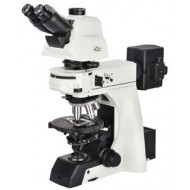
Polarizing Microscope IMP-2300 Series
Polarizing Microscope IMP-2300 Series equipped with a high degree of sensitivity and best suited for anisotropic (mineral) specimens such as geology, minerals, metallurgy, university teaching laboratories, and other sectors. Built-in bertrand lens, polarizer, and analyzer, 360° rotatable round stage, filter, condenser, etc. The trinocular viewing ...

- Full Description
Polarizing Microscope IMP-2300 Series equipped with a high degree of sensitivity and best suited for anisotropic (mineral) specimens such as geology, minerals, metallurgy, university teaching laboratories, and other sectors. Built-in bertrand lens, polarizer, and analyzer, 360° rotatable round stage, filter, condenser, etc. The trinocular viewing head with extra wild field eyepieces and has excellent infinite strain free plan achromatic:4X/0.10-30.0 mm, 10X/0.25-10.2 mm, 40X/0.65(S)-0.7 mm and LWD infinite strain free plan achromatic: 5X/0.13-24 mm, 10X/0.25-10.2 mm objectives and each eye tube has interpupillary adjustment. This series is capable of providing strong images with a broad field of view, the multipurpose, and perfect for basic studies of samples properties. Come with 12V/100W halogen lamp reflected and transmitted lights, allowing samples to be illuminated for a more comprehensive field of view. Accomplished with the help of particular devices known as retardation plates and optical compensators. The first-order retardation plate is used in optical path differences ranging from a fraction of a wavelength up to several wavelengths. This flexible and multipurpose tool is known by different names, comprising a red plate, red-one plate, lambda (λ) plate, gypsum plate, selenite plate, sensitive violet, or simply a color tint plate and quartz wedge plate is a simple, semi-quantitative optical compensator used to examine optical path differences in a wide range of samples by the quartz wedge. Built-in a crystalline block of quartz provide a parallel or perpendicular optical axis to the edge of the birefringent crystal.
- Accomplished with the help of particular devices known as retardation plates and optical compensators.
- Infinite strain free plan achromatic and LWD infinite strain free plan achromatic objective, and Backward sextuple nosepiece
- Gypsum λ Slip, First Class Red, 1/4λ Slip, (Ⅰ-Ⅳ Class) Quartz Wedge optical compensate system
- High point wild field SW10×/25mm, SWF10×/25 with cross line reticle, with fixing pin, SWF10×/25 with cross line, with fixing pin eyepieces
- Coaxial coarse & fine adjustment, range 32mm, fine division 0.001mm, coarse stroke 37.7mm per rotation, fine stroke 0.1mm per rotation
- Polarizing rotatable stage of length 170mm, center adjustable, 360° scale, minimum division 1°, minimum reading vernier scale 6 to 45° stop knob
- Strain-free swing out condenser N.A.0.9/0.25
- 12V/100W Halogen lamp reflected and transmitted light source
- Different filters Blue filter ND6 and ND25 Neutral density filter
- Trinocular 30° inclined and a 360° rotatable head with interpupillary distance 48 to 75 mm and
- Small foot print and light weight
- Easy operating with ergonomic design
- Excellent image quality with NIS60 Infinite Plan Semi-Apochromatic optical system
- Optional accessories video adaptor and filters
- Built-in a crystalline block of quartz provide parallel or perpendicular optical axis to the edge of the birefringent crystal